KLOW peptide side effects: the observation record
Two human ingredient studies offer observations. Copper handling, immune effects and unwanted vessel growth give future follow-up something specific to investigate.
The human safety observations
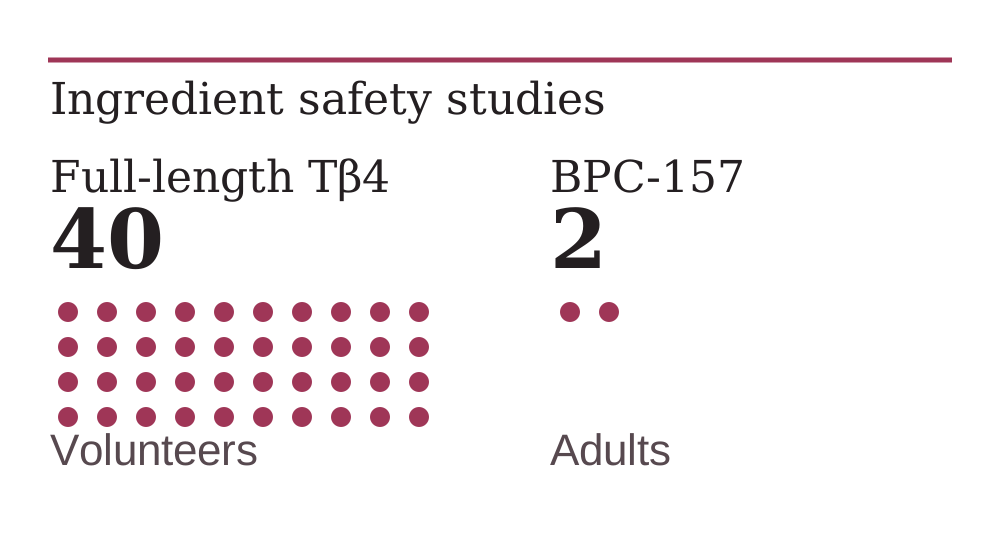
The 2010 full-length thymosin beta-4 trial enrolled 40 healthy volunteers in a randomized, placebo-controlled early safety study. The tested amounts were 42, 140, 420 or 1260 mg intravenously, first as a single administration and then daily for 14 days. Adverse events were infrequent and mild or moderate, with no serious adverse events or dose-limiting toxicities reported. These are study amounts for the full protein, not amounts for KLOW or its TB-500 fragment.
The 2025 BPC-157 pilot involved two healthy adults and intravenous amounts reaching 20 mg. The researchers observed no adverse events and no measurable change in cardiac, liver, kidney, thyroid or glucose biomarkers.
The contrast in study size matters, as does the substance tested. My confidence in either observation stops at the people, treatments and checks it describes. Uncommon events, consequences of prolonged exposure and interactions among the four KLOW ingredients remain unanswered.
Which checks were actually made?
The BPC-157 pilot's reported organ-function and glucose checks are more informative than a general statement that nobody complained. They show that the investigators looked for measurable changes as well as observed adverse events. A normal reported check still has a defined scope.
The unobserved damage worries me, particularly after repeated mixture use. That is a question for a larger, longer investigation; the pilot supplies no rate of rare events and no long-term KLOW outcome.
The 2026 review of musculoskeletal peptide therapies emphasizes scarce rigorous human safety data and the potential for serious harm. Its warning concerns a weak safety record around unapproved peptides; it does not document a particular illness caused by KLOW.

Copper and the dissolved mixture
GHK-Cu carries copper, and its listed 50 mg includes the peptide as well as the metal. Wilson's disease impairs copper regulation, which makes repeated copper delivery a theoretical concern. There is no human KLOW study measuring copper accumulation in people with that condition.
Copper penetration through human skin was measured outside the body. That experiment cannot settle systemic accumulation from repeated blend use. The GHK review also describes the copper complex's role in tissue biology; chemical involvement and clinical safety require different measurements.
Copper can participate in redox chemistry, involving the transfer of electrons. Its effect on the other dissolved KLOW ingredients is an uncharacterized compatibility question. Proven stability, to my satisfaction, requires analysis of the mixture itself.
Blood-vessel and immune questions
BPC-157 promoted vessel growth in preclinical experiments; GHK-Cu and full-length thymosin beta-4 also have pro-angiogenic findings. Angiogenesis means the formation of new blood vessels. That activity helps explain repair interest and raises a theoretical concern where an existing or recent cancer could gain blood supply. No human blend study has established either causing cancer or worsening it.
KPV changes inflammatory signaling in intestinal and immune-cell experiments. Its anti-inflammatory action also differs from that of its parent hormone. During active infection, inflammation contributes to defense; in autoimmune disease, immune activity already behaves abnormally. The implications of KPV or KLOW in those circumstances remain theoretical and untested in humans.
These are the concerns I would put explicitly into the follow-up plan. Calling them demonstrated side effects would overstate the record. Leaving them out would make the record look more complete than it is.
FDA / WADA
KLOW and its four ingredients have no FDA approval for human use. On FDA's page current as of April 22, 2026, BPC-157 appears among withdrawn nominations that were previously in Category 2. Withdrawal does not authorize compounding or put it in Category 1; FDA's safety concerns remain.
WADA prohibits TB-500 and thymosin beta-4 at all times, including outside competition. KLOW contains TB-500, so the blend implicates those anti-doping rules. The musculoskeletal-peptide review discusses the regulatory and athletic context.
Community complaints such as irritated skin, fatigue or nausea are collected on the reports page. Those anecdotal accounts have no reliable frequency estimate, and they leave the theoretical concerns above unresolved.